
New Hampshire
44.249204, -71.573647
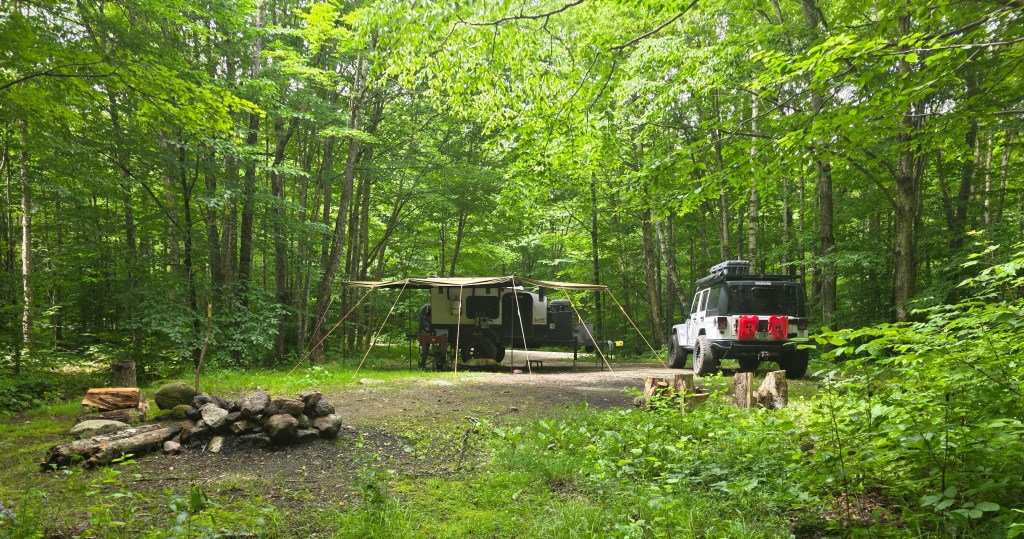
We are camping in the White Mountain National Forest along Haystack Road. It’s a dead end road that ends at the trailhead for the Twin Peaks Trail. It’s not exactly what I would describe as dispersed camping. It is restricted to marked campsites. There are eleven campsites widely spread apart down the 4 mile road. These are first come first served sites. The best part is that they are free.
All the sites are full. We are on site 9 and haven’t heard a fellow camper in 4 days so far. It is very peaceful listening to the whimsical sounds of the Hermit Thrush, Oven Bird and Red-eyed Vireo. In the early evening we even heard the call of the Barred Owl. The Barred Owl has a very distinctive hoot sound in the pattern that sounds like it’s saying, “who cooks for you? Who cooks for you-all?”
Although moose are prevalent in the area I have not seen any. I also have not been actively looking yet in areas that they might be. I hear they come out mostly at night. Maybe in the coming days we’ll go on a moosing adventure down by one of the rivers early in the morning.
Nana and I try to walk the gravel road to the trailhead and back every couple of days. The dog doesn’t do well in the heat. Today was the first day we hit 80℉ since we got up here from New York. The first night was in the low 40’s. Typical highs have been in the 60’s. I got no push back from her on the walks. Today though, we didn’t make it up the first hill before she said no more. She popped a squat in the road until I turned around. If it’s going to be warm we’ll have to get up early to do our walks.
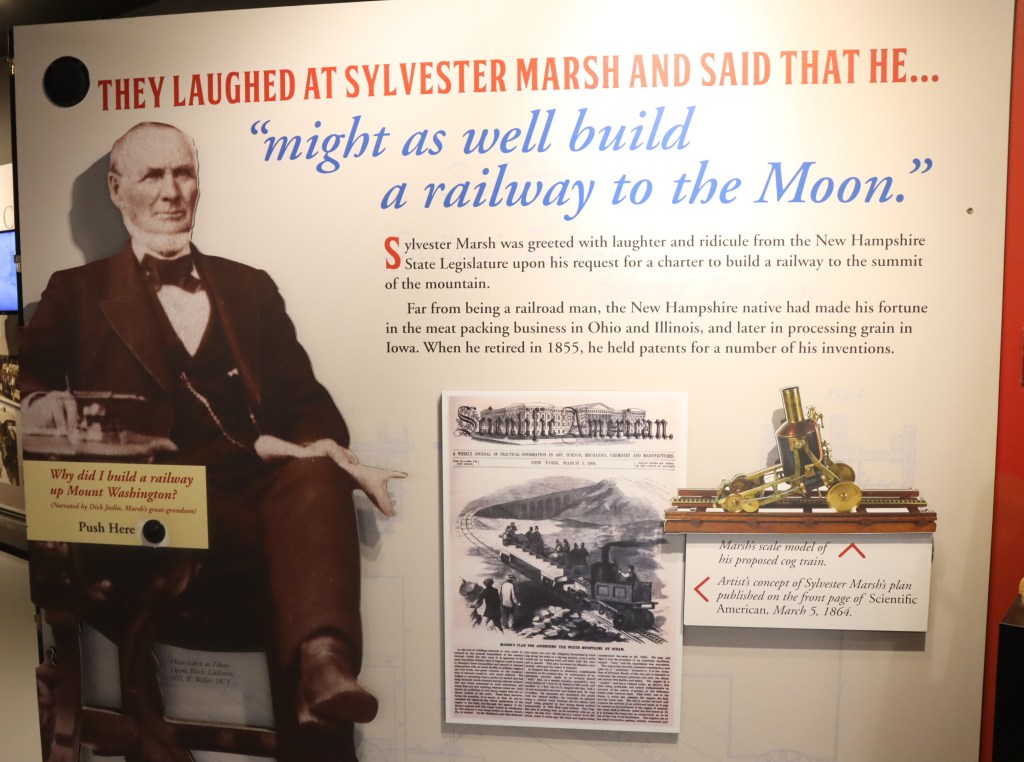
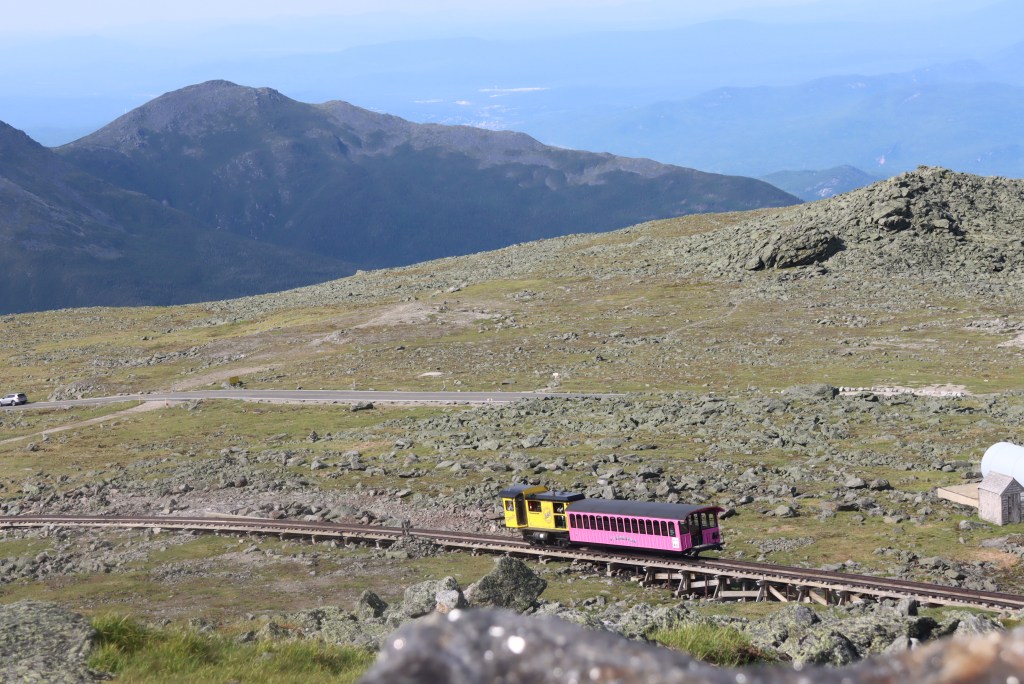
We decided to go up to the top of Mt. Washington. We did not drive or hike. We took a train using the Mount Washington Cog Railway also referred to as The Cog. Opened in 1869 it was the first mountain climbing cog railway. Sylvester Marsh was the designer of the cog system. He decided to pursue the build after nearly perishing on a hike to the summit of Mt. Washington in 1857. This cog and rack system traverses grades up to 37%. Aside from brief shutdowns during the world wars the railway has stayed in continuous operation. They still have steam powered locomotives along with newer bio-diesel locomotives. The steam engines are awaiting new boilers and are not currently serviceable.
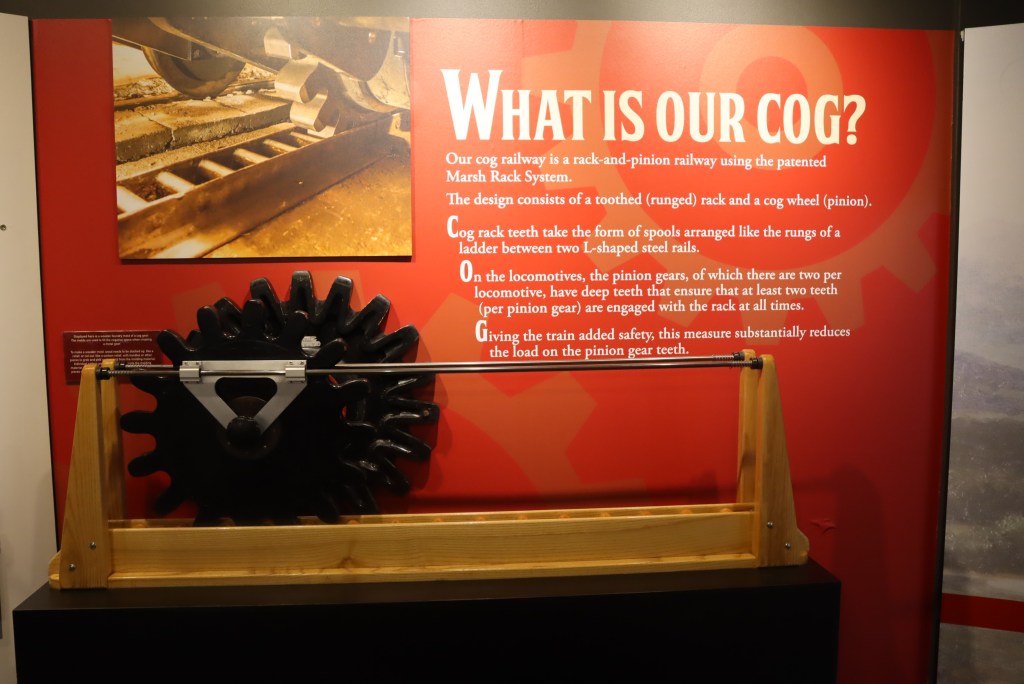
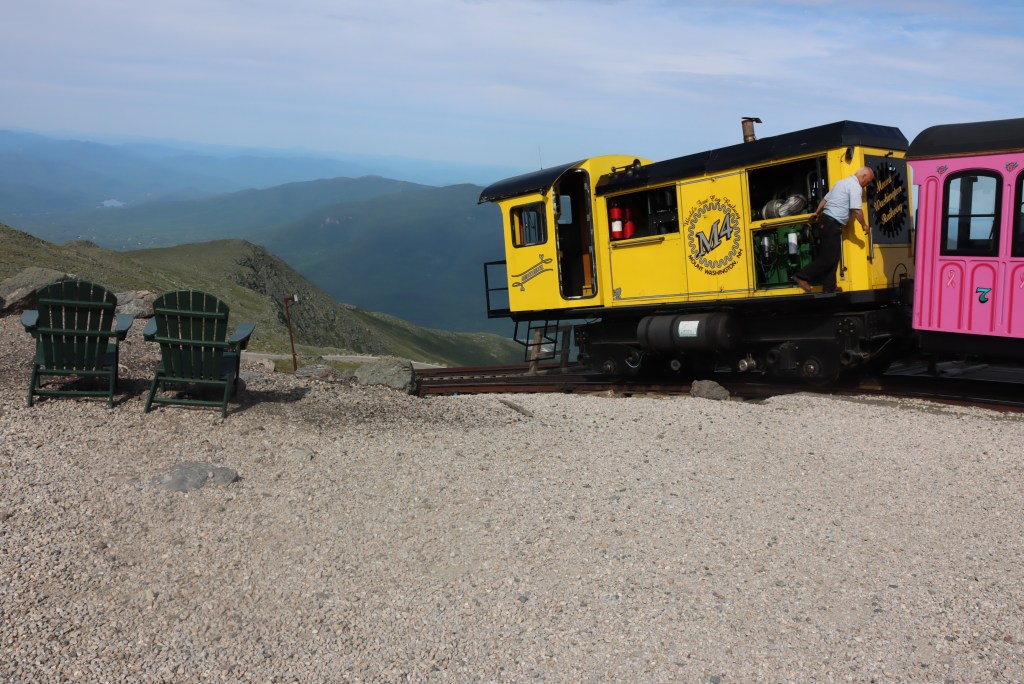
Each engine pushes a single coach up the mountain. The coach has seats that are uniquely designed to be comfortable at an average grade of 20%. Sitting in them on flat ground is not so comfortable because it feels like you are sliding off of it.
As we lurch forward out of Marshfield Base station (elevation 2700’), the train departs. It signals its departure with a loud, long blast of the whistle. Shortly after leaving we crossed the first and only rail bridge. As the incline forced us back into our seats Nana kept sliding under my seat and the children behind us were getting excited to see the puppy! About halfway up and still below the treeline is Waumbek Station (about 4000’). This station is used for winter trips up the mountain after the Summit State Park facilities have closed. After summiting the train stops here for warm shelters and hot drinks. It boasts awesome panoramic views of distant mountains as far as the Adirondacks in New York to the peaks in Quebec, Canada. It’s June so this was not open for us. There is also a water tower for refilling the steamers when they make the ascent.
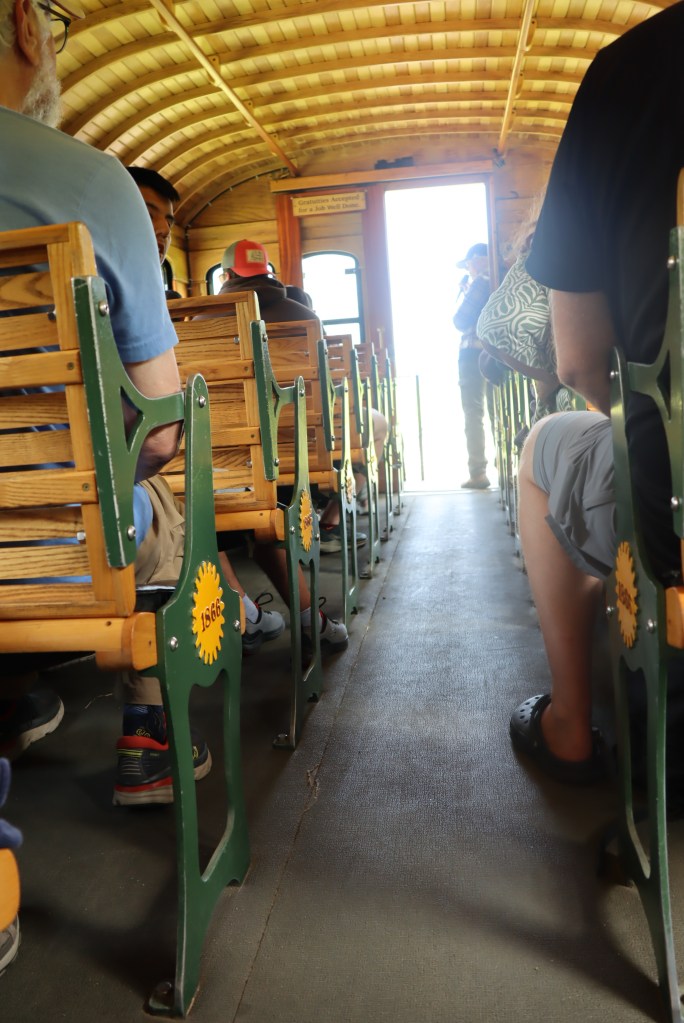
The trains travel about 3 mph on ascent. Thanks to gravity they are slightly faster at 5 mph on descent. I suppose without proper braking the descent could be MUCH faster. It takes about 45 minutes to make it to the peak (elevation 6288’). The facilities at the peak are run by the New Hampshire State State Parks. There is a museum, gift shop and cafe. The Appalachian Trail also comes through here and it is about 333 miles from the northern terminus of the AT. The facilities must come as quite the respite for through hikers. There is a full time weather station. It is manned 24 hours a day and 365 days a year. The peak of Mount Washington is known for the worst weather in the United States. The highest human observed wind speeds were recorded there on April 12, 1934. They were 231 mph and stood as the record for 60 years. Other automated weather stations have since recorded faster wind speeds but none have been witnessed by human beings. Today we were lucky and the weather was top notch. It was about 15℉ cooler but bright and sunny us.
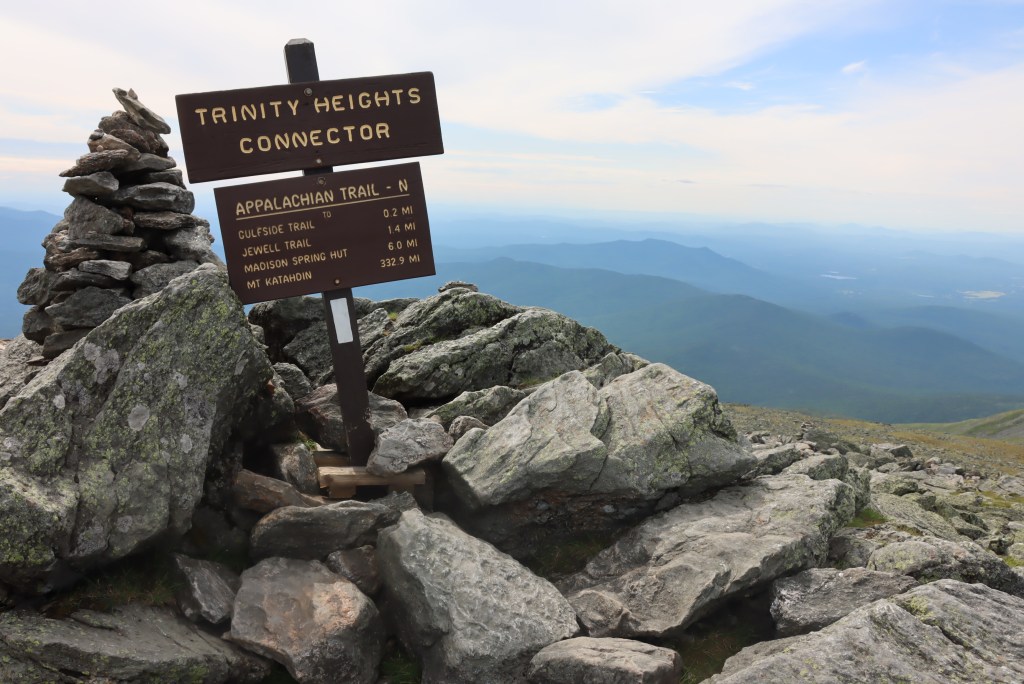
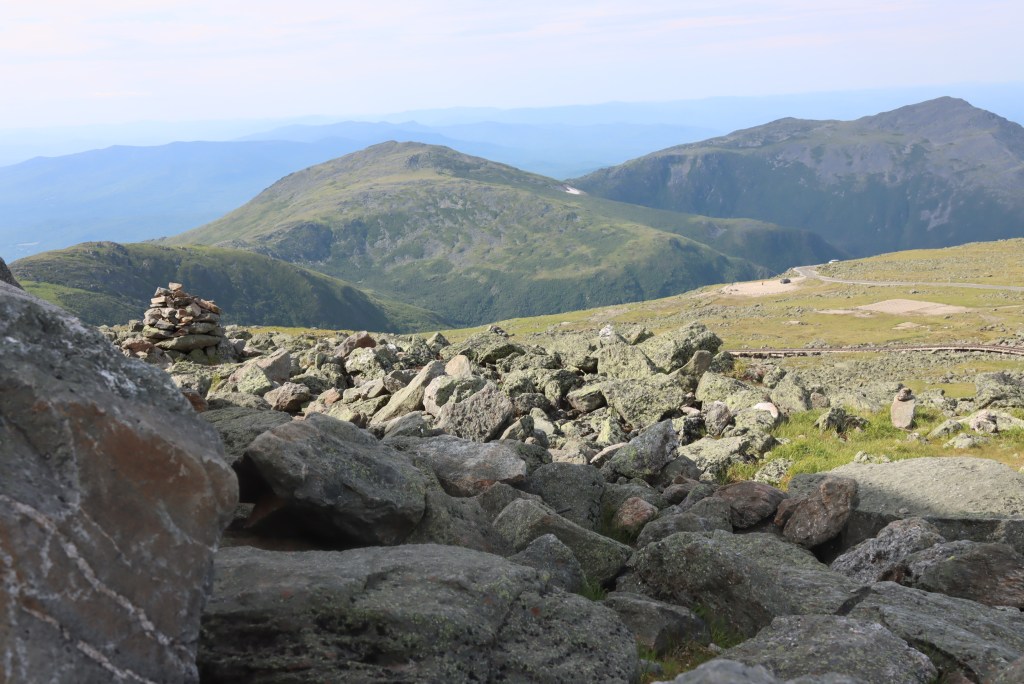
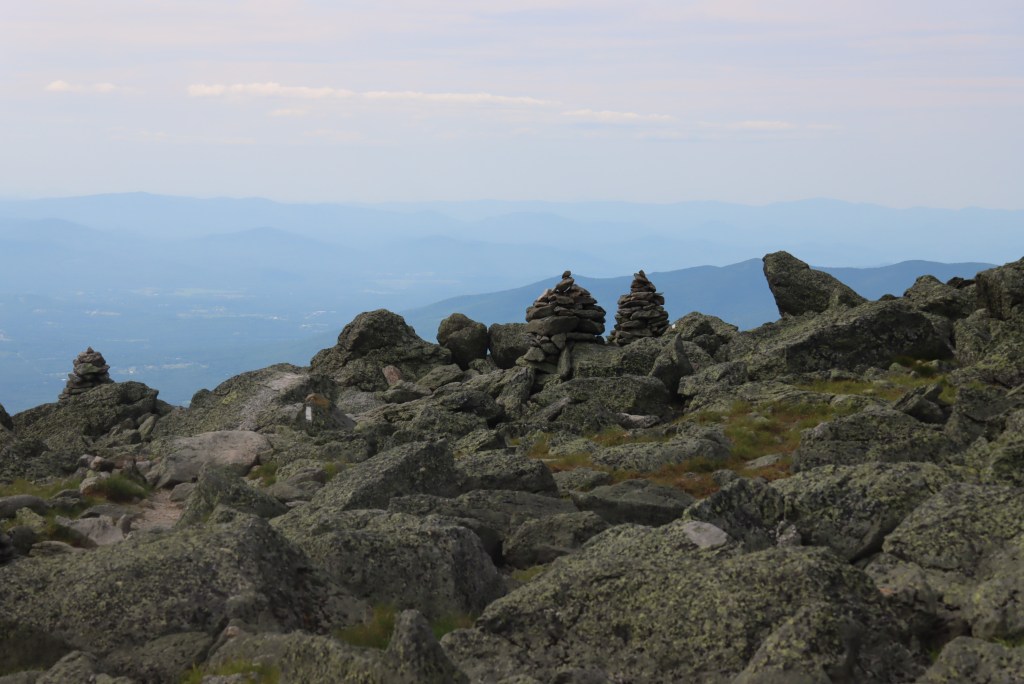
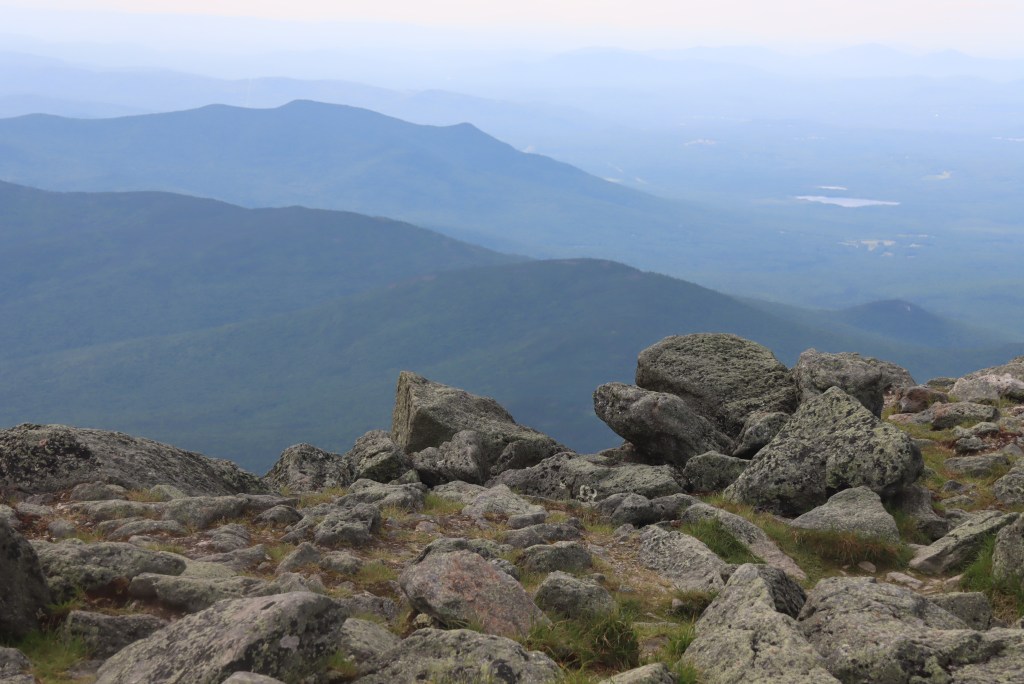
After about 50 minutes at the peak another train comes to pick us up. There is no track turntable to turn the engine or cars around at the peak. The engine instead leads the coach down the mountain instead of pushing. The backs of the seats flip over on a pivot so you are now facing the opposite direction. The seats are now optimized for the average 20% grade going back down. Although they say the descent is more dangerous than the ascent our trip was uneventful.
We made it back to to Marshfield Station. Sometimes it’s the slow and steady pace that gets you where you want to be. You set a goal and when reaching the peak you have no idea what to expect when you get there. You might get warm weather and sunshine or rain, snow, hail and storms. Who knows what’s up there until you get there. The great thing is if reaching your goal isn’t what you expected, you can ride the train back down. You can try again. You get to take away everything you’ve learned along the way. There is no end to the goals you can attain or peaks you can summit.
 Bear Belly Adventures
Leave a comment